
The La Crosse County Owner-of-Record Trail
Start with the municipal assessment record for the parcel. Assessment is local here. Cities, villages and towns in La Crosse County maintain or contract their assessment functions, while county Land Information maintains the shared parcel data. The roll may show an owner-of-record name. Field labels vary by municipality, so confirm the assessment year, situs address, mailing address and parcel identifier with the local assessor.
Next, pull the most recent deed from the Register of Deeds index. Read the grantee and legal description. Those fields show which interest and which parcel the instrument covers. The recording date matters most. It signals a recent transfer better than an older tax bill does. One deed alone is not a title search.
| Record detail | What it can show | What to verify |
|---|---|---|
| Owner name | Owner listed in the local assessment record | Municipality and assessment year |
| Mailing address | Where a notice may be sent | Do not mistake it for the parcel's situs |
| Deed grantee | Recipient named in a recorded transfer | Legal description and recording date |
| Parcel ID | County reference to a mapped tax parcel | Exact zero-padded identifier |
How Current Is a La Crosse Owner Record?
The assessment timeline is not a closing feed. A roll can lag a transfer. January 1 assessment dating drives that lag in La Crosse County. A newly split parcel may get a new number midyear while taxes stay on the whole tract to the owner at the time of the split, and separate taxation begins the next year. The result is that the map, the deed and the bill can appear to name different owners.
Compare dates before deciding a record is wrong. Note the roll date, the deed's recording date, any split or combination date, and the tax year. Update intervals vary by municipality. No countywide refresh schedule applies. Ask the local assessor when its record updates. Ask the Register of Deeds when an instrument is indexed.
If the deed is newer than the bill or roll, treat the deed as the more current transfer. The bill does not erase it. Confirm separately how the assessor carries the parcel for the tax year.
Confirm the Present Owner from Roll to Deed
Use a short, repeatable check. Find the parcel in the county Parcels app by address, owner, Tax ID or Parcel ID. Search by address first. Note the full fixed-width parcel identifier. Note the municipality too. Contact the local assessor for the assessment record and copy the owner name exactly. Then search the Register of Deeds for the latest conveyance involving that parcel. Compare the grantee, recording date and legal description. If the names differ, check whether the deed was recorded after the assessment date. Or check whether a split, estate transfer or entity name explains the change.
- Confirm the situs address and municipality in county GIS.
- Write down the assessor owner name, mailing address and assessment year as displayed.
- Locate the most recent relevant deed by the known owner or instrument reference.
- Compare the legal description and parcel history, not just the names.
- Ask the assessor or recorder to clarify an unresolved date or index gap.
The Register of Deeds can help with a document number or volume/page reference at 608-785-9644 or 608-785-9645. Call before guessing at an online result.
Situs, Mailing and Return Addresses Are Different Fields
The situs address describes the physical parcel location. A mailing address is where a tax notice goes. A return address on a recorded instrument serves a document-return purpose instead. These fields can differ without signaling a problem. Search for the land by the situs address. Then use the parcel ID to connect the assessment and deed. Do not assume the person receiving mail is the owner. A mailing address also does not mark the parcel location.
La Crosse County's map and address framework is shared, while assessment stays municipal. A postal city name does not settle jurisdiction. Onalaska has separate city and town governments; Holmen is legally a village. Confirm the municipality in GIS. Then route assessment or zoning questions to the office serving that jurisdiction.
- Owner of record
- The name recorded in an administrative or instrument record, understood in that source's context.
- Situs address
- The physical address attached to the parcel.
- Mailing address
- The address used for correspondence; it may be elsewhere.
- Recording lag
- The interval before a recorded transfer is reflected in a separate assessment or tax record.
When a Recorded Deed Is Newer Than the Assessment
A recorded deed and a tax bill can tell different stories. They serve different purposes and periods. The Register of Deeds records the instrument. The municipal assessor keeps the assessment record, and the County Treasurer or municipality tracks payment. If the assessor still shows the prior owner but a later deed names a new grantee, confirm both papers describe the same tract. Also confirm that the deed is recorded. The older bill is not proof that no transfer occurred.
Online Paygov copies require a volume/page or document number and an approximate recording year. The county charges $2 for the first page. It charges $1 for each extra page and about $1 in Paygov fees. A certified copy is mailed within one business day. Expedited service costs extra. Contact the office before ordering if you lack the reference. A certified instrument evidences the filed document, not a guarantee of complete title.
Recent-sale check. Compare the roll's year with the deed's recording date. If they differ, ask the assessor how the current tax record is being carried.
This page narrows in on the current owner-of-record details. For the wider path from an address to an owner and a deed, use the county ownership method page instead.
Business, Trust and Estate Owners Need Context
The owner field does not always name a person. It may hold a company, a trust, or an estate. A signer on the instrument might act as trustee, personal representative, or authorized agent. Read the full legal name and capacity in the deed first. Then compare it with the assessment record. Assessor labels are often shortened, so they can leave out details the recorded instrument contains. A shared name alone is not enough. Do not treat it as proof of ownership without a document tying that person to the entity or the land.
Estate transfers raise their own questions. A transfer-on-death instrument, survivorship deed, personal-representative deed, probate order, or estate deed may all be involved. Wisconsin Circuit Court Access can point to public circuit cases. Yet the Register of Deeds remains the custodian of recorded real-estate instruments. A death record can help establish a date or relationship, subject to eligibility rules. It still cannot tell you who received a parcel.
When nothing matches cleanly, bring the parcel ID and document reference to the assessor or the recorder. Guessing from an entity name can wrongly attach a person to property.
If ownership is unclear, verify before drawing conclusions. The right custodian can resolve the gap.
Use the City Assessor Example for City Parcels Only
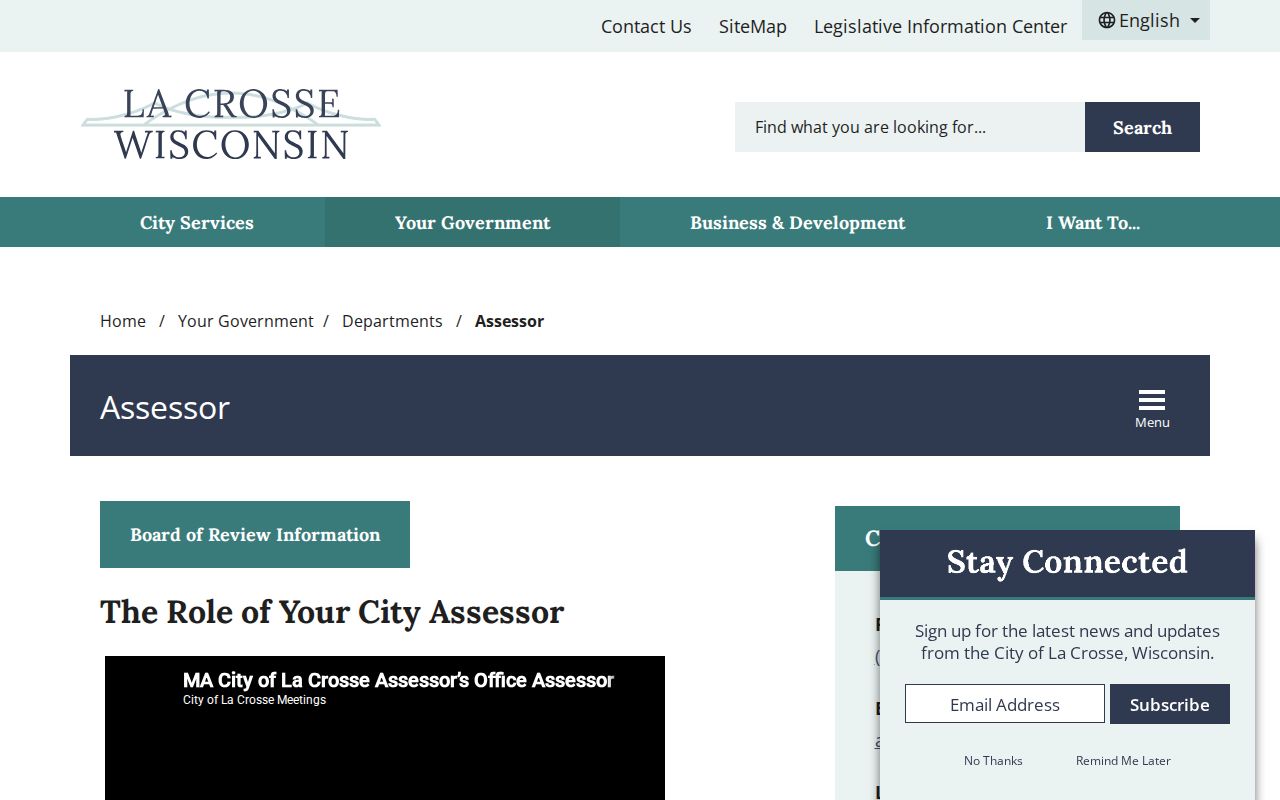
The City of La Crosse Assessor offers a limited free search, an expanded paid search, objection information, sales PDFs, and exemption forms. The office sits at 400 La Crosse St., third floor, La Crosse, WI 54601, and answers at 608-789-7525. Hours run Monday through Thursday, 8 a.m. to 4 p.m., with Friday hours of 8 a.m. to noon. These assessment resources apply only within the city's jurisdiction, not to every parcel in the county.
The city assessor's page displays its local assessment and sales links. Those tools reflect municipal custody. Deeds stay with the county, and parcel geometry comes from county Land Information. For a property outside La Crosse city limits, identify its municipality in GIS and ask that assessor for the owner-of-record entry and its timing.
Visit the City of La Crosse Assessor for its current local assessment materials.
If the parcel sits in another municipality, use that city, village, or town assessor instead.
Protect Confidential Addresses and Verify With the Custodian
Wisconsin Safe at Home gives eligible survivors a substitute address. Treat a protected address differently from a normal public owner-address result. Respect the program. Never use property records to locate, stalk, harass, or harm anyone. Keep any public-record research tied to the property question. Stay within the details needed to answer it.
When accuracy matters, contact the office holding the record. The assessor can explain its owner field and update timing. The Register of Deeds can identify a recorded document reference. Land Information can clarify a parcel or municipality field. A record lookup is not title insurance, legal advice, or a survey. Preserve the source, dates, and exact legal description. A professional can then review the same evidence later.
County public records serve property diligence well. To confirm the current owner, check the assessor and the deed. Both must agree on the same parcel and time period.