
Start With the Last Grantee and Work Backward
Build a dated chain instead of a pile of names. Find the newest deed for the parcel. Note its grantee and legal description. Then search that same person as a grantor. That reaches the next conveyance back. Keep going one transfer at a time. At each step, check the parcel description. Note any plat or CSM reference, the recording date, and the instrument type. That discipline keeps adjacent lots and similarly named people from collapsing into one confused story.
| Transfer date | Grantor to grantee | Instrument type | Reference to keep |
|---|---|---|---|
| Most recent first | Prior owner to present grantee | Recorded deed | Document number or volume/page |
| Earlier transfer | Earlier grantor to later owner | Deed or estate instrument | Legal description and date |
| Older link | Named parties in the next record | Deed, land contract or court-linked transfer | Plat, CSM or PLSS description |
Treat any ownership table as a working index. It cannot replace the filed papers. A title professional is needed to reach a reliable conclusion about the full chain and any competing interests.
Read the Grantor-Grantee Roles in Each Deed
A grantor conveys an interest. A grantee receives it. Moving backward, a former owner usually shows up as grantee in an earlier acquisition and grantor in a later transfer. Trusts, estates, land contracts, and other instruments can blur that pattern, so never assume every name is an individual owner. Record the capacity and instrument type from the filed document itself. La Crosse County records deeds, land contracts, mortgages, satisfactions, assignments, and plats. A mortgage or satisfaction matters to the property record. But it is not a deed transfer. The online index does not publish its earliest year or full search controls. If the portal misses a known transfer, call 608-785-9644 or 608-785-9645 and ask reference staff what they need to locate the document.
- Grantor
- The party named as conveying the interest.
- Grantee
- The party named as receiving the interest.
- Chain of title
- The sequence of recorded instruments tracing interests in one parcel.
- Legal description
- The text identifying the tract in the recorded document.
Names establish a likely connection only when the parcel and land description also match.
How Far Back the Online Deed Search Goes
The county publishes no stated start year for its online deed index. So draw no cutoff. Never treat a missing online result as proof a transfer went unrecorded. The Register of Deeds can help identify the right volume, page, or document number. The public portal replaced the older LandNav route. Ask the office how older volumes and deed books can be searched. Do this when a chain runs past the online coverage. The Register of Deeds also offers genealogy access by appointment. Hours are Tuesday through Thursday, 9 a.m. to 3 p.m., one searcher at a time. Call 608-785-9644 before visiting. County history sources and local archives hold older maps and directories with useful leads. They do not replace the deed index or establish ownership. Mark any unverified gap clearly until the custodian confirms the right book or film series. For a copy order, bring a document number or volume and page. An approximate recording year helps too. Locate the reference first. A copy request is not an open-ended chain search.
Historic Deed Books Need Plat and Map Context
The 1857 La Crosse map offers an alphabetical plat index, a record-date ordering of plats, and selected owner names. Some plats were never entered on county record. The 1886 map adds plat-vacation laws and plats missing from county records. It also shows tract descriptions and red-outlined additions. Both matter when an old owner conveyed land under an addition name. That name may no longer label a current parcel. Use the map to spot a possible addition or lot. Then trace the recorded legal description through the deed chain. A vacated plat can change how land appears in later instruments. Treat it as a clue, not proof the current lot vanished. The historic map archive draws on the public library, UW–La Crosse Murphy Library, and the Wisconsin Historical Society. So search by owner, street, railroad, water works, cemetery, or marsh. Try a present-day address as well. When an older instrument uses metes and bounds or PLSS language, preserve the whole description. Connect it to any later CSM, plat, or parcel reference.
Directories Help Identify a House, Not Its Title
La Crosse directories stretch back to 1866. Online coverage runs through 1963, and print volumes continue to the present. A directory tells you who lived at an address in a given year. That makes it a useful bridge between a house and its likely owner or occupant before you search deed records. Rural-route lists for 1893, 1895 and 1932–1969 help too. Many older properties carried no numbered street address at all.
Treat a directory name as a clue only. An entry is not proof of title. The listed person may have rented the place or run a business there. They may also have shared a surname with the actual owner of record. Addresses themselves change over time. Follow the lead, then confirm with a plat or deed. A prior owner may have died. Probate materials, a personal-representative deed or a transfer-on-death instrument may explain a break in an otherwise simple person-to-person chain.
The La Crosse Public Library directory archive outlines both the online and print holdings. The archive's catalog page shows where to start.
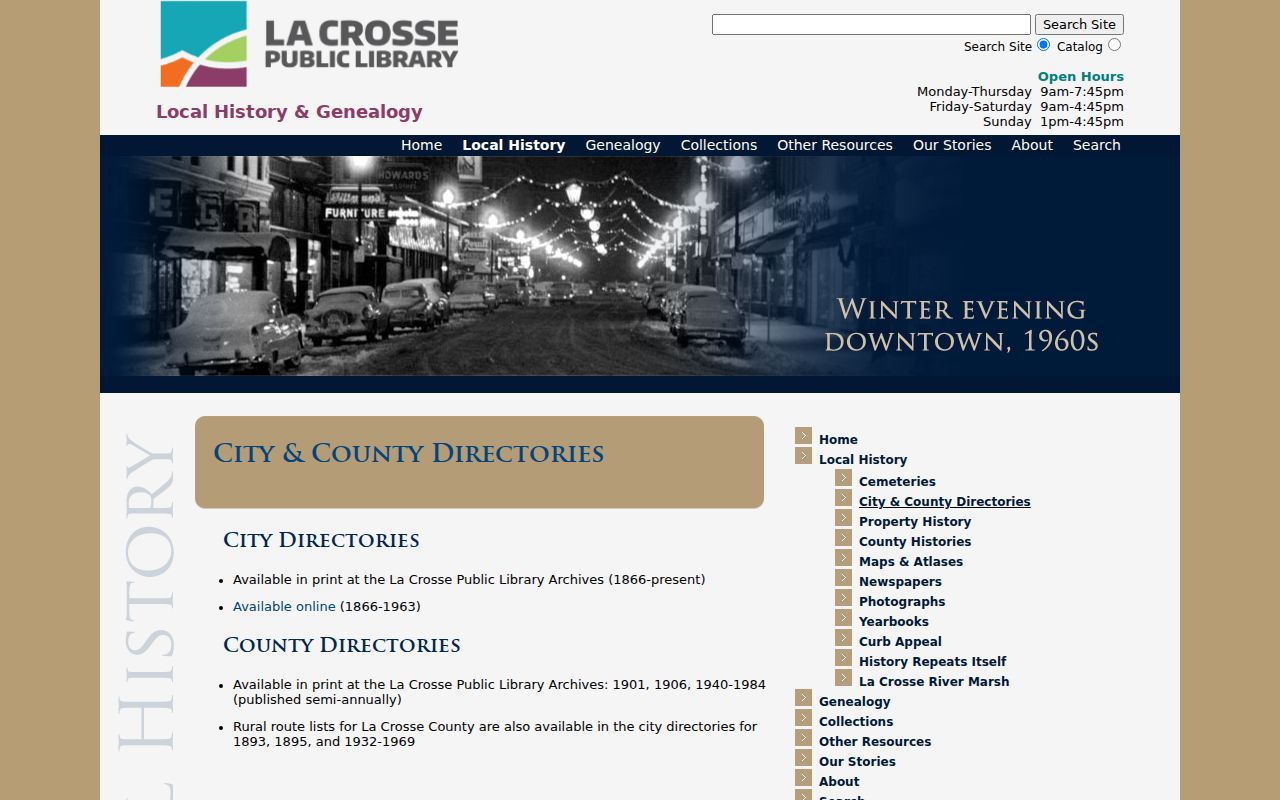
Carry a directory lead to the deed record before calling someone a former owner.
Plat Vacations Can Interrupt a Modern Parcel Match
An old addition name rarely connects cleanly to a modern parcel number. Plat vacations get in the way. La Crosse's 1886 map lists laws that vacated plats outright, and the 1857 map notes plats absent from county records. Lots were vacated or absorbed into later additions. Every later deed then carries a different legal description. When an old lot disappears from the current map, that shift is a strong clue.
Compare the evidence piece by piece before concluding anything. Set the old map label beside the recorded plat, the vacation instrument, the later legal description and the current parcel map. The nearest modern lot may be different land. The Register of Deeds holds the recorded plats; county GIS shows today's parcels and addresses. If a historic tract name has no clear match in the index, ask the recorder or the Surveyor's Office which record series documents the change.
Probate and Estate Transfers Can Break the Name Chain
Death interrupts a clean name chain. An owner's property may pass through a transfer-on-death instrument, a survivorship deed, a probate order, or a personal-representative deed. It may also pass through an estate deed. Search the deceased owner as both grantor and grantee. If the dates point to court, check WCCA for a public probate or estate case. Get the actual deed or court file. Never infer a transfer from an obituary or family directory.
Death certificates have eligibility rules. They establish vital facts, but they say nothing about who received a particular parcel. The county Register of Deeds issues eligible vital records. Wisconsin DHS is the statewide issuing authority. The title trail itself lives in recorded instruments and court orders. A trust or business can replace an individual in the next deed. Note the signer's capacity and the entity's full name. If the online deed portal misses an older estate transfer, ask the recorder about the index. Call the court clerk for the public file reference.
Ordering a Prior Deed Copy by Its Reference
Ready to order a deed copy? The County Register of Deeds takes online Paygov requests using a volume/page or document number. Include the approximate recording year. The first page costs $2. Extra pages run $1 each, plus about $1 in Paygov fees. The cardholder's signature and identification must be scanned and sent by email or fax.
Walk-in requests are usually handled the same day. Emailed copies generally go out the same day too. Mailed requests are finished within one business day, and certified copies are mailed within one business day. Expedited service costs extra. Ask for a certified copy only when the receiving agency or proceeding requires that form. Call 608-785-9644 or 608-785-9645 before ordering if the reference is unclear, since staff can sort out document-number and volume-page questions.
Keep the Former Owner Timeline Evidence-Based
Keep every link in the chain documented. Record the source title, instrument number, date, parties and legal description. Note why each item seems to describe the same parcel. Mark unknown years and unresolved map labels as gaps. Never plug a gap with a family story. A tax-roll name or directory occupant is not proof of ownership. If the property crossed an old municipal or plat boundary, treat the 1857 and 1886 map indexes and the current legal description as separate evidence rather than equivalent labels.
Match your endpoint to the question you are asking. A house history can lean on directories and newspapers to identify residents. An ownership chain needs recorded instruments. An estate transfer may require probate records, and for an older chain the next step is asking the Register of Deeds how to reach the relevant book or archival index.
Genealogy Sources Help Place a Name in Time
Wisconsin DHS keeps genealogy indexes for birth, death, marriage and divorce records. Each type has its own access period. In a La Crosse County former-owner search, these sources can pin down a date or family relationship, while deeds and probate papers prove the actual transfer. The DHS genealogy access page lists the coverage.
Plan an eligible request around the displayed period. Then return to the recorded deed or court file to verify the property's transfer.